Hulpwerkwoorden engels betekenis
Een hoofdwerkwoord is het belangrijkste werkwoord en zal een actie of toestand beschrijven / de betekenis aangeven; Een hulpwerkwoord geeft dan weer meer uitleg over het hoofdwerkwoord. Soms worden hulpwerkwoorden ook gebruikt om een bepaalde tijd aan te duiden. Hierover volgt later meer. Hulpwerkwoorden in het Engels zijn werkwoorden die geen op zichzelf staande betekenis hebben en alleen worden gebruikt in combinatie met andere werkwoorden om vragen te vormen, ontkenningen te maken, verschillende tijden te vormen, enzovoort. De hulpwerkwoorden in het Engels zijn. Hulpwerkwoorden engels betekenis Inleiding In de Engelse grammatica spelen hulpwerkwoorden een belangrijke rol. Hulpwerkwoorden, ook wel bekend als auxiliaire werkwoorden, worden gebruikt om de betekenis van het hoofdwerkwoord te versterken of om verschillende grammaticale functies uit te drukken. Ze voegen diepgang en nuance toe aan zinnen en helpen om complexe ideeën en concepten over te brengen. In dit [ ].

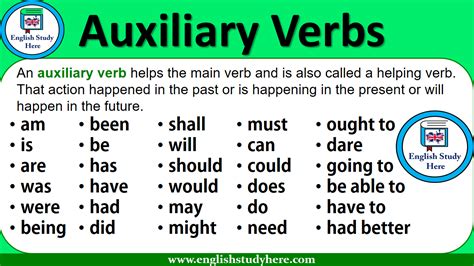
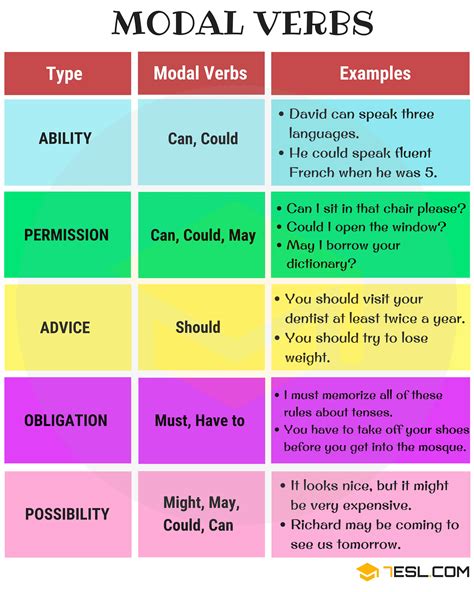
Helping verbs Learn what auxiliary verbs are, how they support the main verb, and how to use them in different tenses and moods. Find out the difference between main and modal auxiliary verbs, and see examples of common auxiliary verbs in action.


Auxiliary verbs
Learn what auxiliary verbs are, how they support the main verb, and how to use them in different tenses and moods. Find out the common and modal auxiliary verbs, and see examples of their usage and functions. Learn what auxiliary verbs are and how they help other verbs form different tenses and moods. Find out the most common auxiliary verbs (be, do, have) and how to use them in progressive, passive and perfect tenses.Auxiliary verbs 1. Primary Auxiliary Verb. These are used to form different tenses, questions, negations, and passive voice. There are three primary auxiliary verbs: be (am, is, are, was, were) have (have, has, had) do (do, does, did) Examples: She is running. (progressive tense) They have finished the project. (perfect tense) Do you like tea? (question) 2.
Modal verbs
Learn what modal verbs are and how to use them to express conditions such as possibility, ability, permission, and habit. See common and less common modal verbs and their forms in different tenses. Learn what modal verbs are, how they are used to express different meanings, and how they differ from regular verbs. Find out the common modal verbs, their types, and their usage in statements, questions, and negative sentences. Modal verbs Learn what modal verbs are and how to use them to express modality (such as possibility, ability, permission, obligation, and condition). See examples, tables, and tips for using modal verbs correctly.Helping verbs
Learn what helping verbs are and how they are used to express tense, voice, and mood. Find out the difference between helping verbs and modal auxiliary verbs, and see examples of both. Learn how to use helping verbs to express verb tense and modality in English. Find out the difference between auxiliary verbs, modal verbs, linking verbs, and action verbs with definitions and examples.Grammar
GrammarCheck is a tool that checks grammar, spelling, punctuation, word choice, and style in your text. You can also use features like thesaurus, title capitalizer, ideal lengths, writing stats, and keywords to enhance your writing. Use the #1 free AI-powered grammar checker to instantly correct grammatical mistakes, typos, punctuation, and spelling errors, enhancing your writing with ease.- Grammar Grammarly makes AI writing convenient. Work smarter with personalized AI guidance and text generation on any app or site.